
 Posted by
 Motilal Oswal’s CAIO argues that technology teams are treating probabilistic systems like deterministic code leading to lack of measurable outcomes
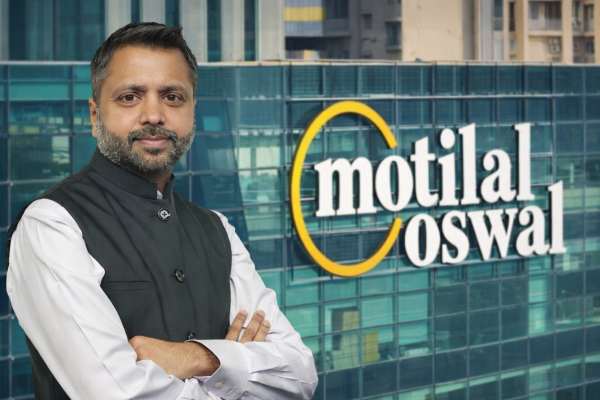
Mumbai: “AI, AI everywhere, not a drop of ROI,” says Motilal Oswal’s CAIO Siddharth Sureka, in his blunt assessement of enterprise AI today.
And that’s why, as Chief AI Officer (CAIO) at Motilal Oswal Financial Services Ltd, Sureka has spent last year building an AI organisation across seven group companies. During this time, he has observed that the challenge is not technological, but conceptual.
“The technology minds are running the AI world,” says Sureka. “The distinction matters. Pre-AI software development was largely deterministic. You wrote conditional logic, and the system behaved predictably.”
“But AI systems are probabilistic. They operate on patterns, uncertainties, and statistical confidence rather than fixed rules,” explains Motilal Oswal’s CAIO Sureka. Technology teams accustomed to the former struggle when thrust into the latter, and the result is a proliferation of initiatives that burn capital without delivering measurable returns.
The Control Tower model
As Motilal Oswal’s CAIO, Sureka’s role is structured around what he calls a “control tower” approach. Essentially, it is a centralised oversight of AI activity across the group’s diverse entities, which span broking, asset management, and financial advisory services.
When he first came in, the organisation conducted an assessment across verticals and functions to identify where AI could contribute in three areas: core revenue generation, process optimisation, and workforce productivity. The assessment helped Sureke identify solutions that could be applied broadly, while others could be customised for specific business units.
“There are common platforms and tools that will be applicable across,” Sureka explains. “Those become higher priority because they give you acceleration for benefiting more people in the organisation.”
His early productivity gains have come from adopting existing tools rather than building from scratch. For instance, GitHub Copilot, deployed for the development team, has delivered a 20-25 percent productivity boost.
Then there are marketing teams that now generate more than half their images and copy using AI-assisted tools, which has accelerated time to market without reducing headcount.
“The impetus is not to reduce the workforce but to do more,” Sureka adds. “We have so much backlog that it’s about getting more out there.”
A talent strategy built on flexibility
Sureka’s AI organisation is structured around five capability areas. Investment sciences (market and stock price modelling), conversational AI (chatbots, email automation, research assistants), growth AI (client behaviour analysis), personalisation (tailoring digital touchpoints), and research (developing new models and feeding insights back into the other verticals).
To staff these areas, Motilal Oswal is pursuing four parallel paths. Core capabilities, particularly, the ones tied to client-facing systems are being built in-house to retain strategic control. Vendor partners with relevant technical experience are being brought in to augment internal teams.
Then certain components are being outsourced where proven solutions can be adapted quickly. And for established tools like Copilot or generative marketing platforms, the approach is straightforward procurement followed by internal training.
The financial services company’s infrastructure partnerships span multiple hyperscalers. “Depending on the use case, we try to take a best-of-breed solution mindset,” Sureka says. “The architecture includes a cloud platform with a governed data lake, AI models sitting between infrastructure and product layers, and a product team responsible for how those models manifest across channels.”
Governance drawn from U.S. frameworks
Before joining Motilal Oswal in November 2024, Sureka worked for close to seven years as Head of Cognitive AI at Charles Schwab, a US-based financial services major. Given his experience in AI, he has brought the responsible AI frameworks common in U.S. financial services into his current role.
The approach focuses on three areas: limiting bias in training data through disciplined methodology, ensuring reproducibility by validating model outputs and tracking behaviour over time, and monitoring data drift as demographics and user needs evolve.
“The model may also be updated at some point, with occasional refresh with both input and output kept in mind. So we can manage data drifts well,” says Sureka.
These aren’t merely compliance exercises. In financial services, where decisions affect client portfolios and regulatory scrutiny is constant, explainability and auditability matter as much as performance.
The probabilistic challenge
Sureka keeps returning to the conceptual gap between traditional software and AI. “Exploration is ambiguous,” he says. “You have to understand the data, and time spent experimenting is probabilistic. Exploitation is when you know what you’re going to get, and it’s more deterministic.”
Technology organisations, he argues, remain rooted in exploitation thinking. They approach AI projects expecting predictable outcomes and defined timelines. “When models require iteration, when outputs shift based on evolving data, and when guardrails must be continually adjusted, then frustration sets in,” points out Sureka.
“As long as there is upskilling and understanding of why it’s different, how to live in this probabilistic world and put guardrails around it, then you’ll start seeing ROI,” says Motilal Oswal’s CAIO.
Whether organisations can shift mindset as quickly as they adopt tools, remains an open question.
Motilal Oswal’s control tower model and structured talent strategy suggest a deliberate approach.
But Sureka’s own observation, that AI is everywhere without commensurate returns, indicates the industry remains far from solving the underlying problem he has identified.