
 Posted by
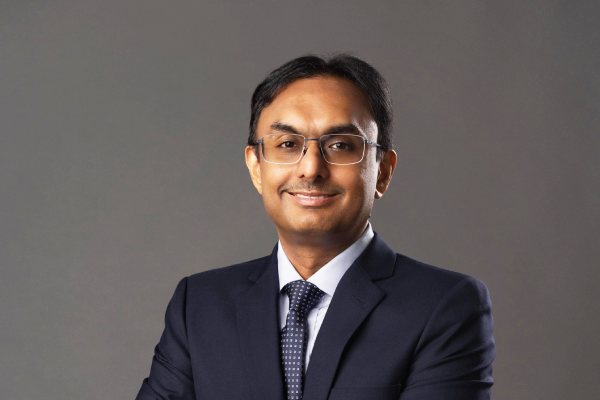
 “From Linux and cloud native to edge and AI, the focus is on building platforms that last,” says SUSE CTO Vishal Ghariwala.
Enterprise technology leaders today are operating in an environment defined by volatility. AI capabilities are evolving at an extraordinary speed, regulatory expectations are tightening, and long-term infrastructure decisions are again under scrutiny.
In this climate, SUSE is positioning itself less as a vendor chasing technology cycles and more as a platform company focused on durability, openness, and architectural continuity. That direction is shaped in part by Vishal Ghariwala, who is the first CTO for APAC, Japan and China regions.
Ghariwala, who joined SUSE in 2021, has spent the last 4 years strengthening SUSE’s technical engagement with customers, building regional mindshare, and feeding market signals back into the company’s global technology strategy.
In this edition of CTO Talks with TechHerald, SUSE CTO Vishal Ghariwala outlined how SUSE’s roadmap across Linux, cloud native, edge computing, and AI reflects a deliberate shift toward long-term platform thinking rather than short-term innovation cycles.
A layered strategy built on foundations
SUSE’s approach rests on four technology pillars: Linux, cloud native platforms, edge computing, and artificial intelligence. These are not treated as isolated offerings, but as layers that reinforce one another.
“We started as an enterprise Linux company, but today we are driving innovation across four key areas: Linux, cloud native, edge, and artificial intelligence,” Ghariwala said. “It actually starts from the base, which is Linux and cloud native. That forms our foundation.”
This framing reflects how enterprise environments actually operate today. Traditional workloads, Kubernetes-based applications, distributed edge deployments, and AI systems increasingly coexist. SUSE’s strategy is to ensure that these layers evolve together rather than fragment into disconnected stacks.
Linux 16 and the discipline of long-term design
One of the clearest expressions of this thinking is SUSE Linux 16, the next major generation of its enterprise operating system. While Ghariwala shied away from disclosing release timelines, he did emphasize that the release will represent a meaningful architectural step forward. “It’s going to be significantly different in terms of architecture, function, and the way it addresses newer requirements,” he said.
The upcoming version is being designed to support both traditional enterprise workloads and newer ones such as containers, edge deployments, and AI-driven systems. “It will be streamlined not just for older workloads but also designed for future workloads like container-based workloads, remote edge environments, and AI workloads,” Ghariwala added.
Longevity is a central design consideration. He pointed to the well-known Year 2038 limitation as an example of why infrastructure planning must look far ahead. “We are going to make sure that SUSE Linux 16 doesn’t end up with that issue,” he said, adding that SUSE intends to support the platform well beyond 2038.
For enterprises running mission-critical systems, this long horizon matters. Products that are used by enterprises, especially core infrastructure products like Linux, need a long life cycle, Ghariwala noted.
Managing multi-Linux environments at once
Another area where SUSE is seeing growing traction is multi-Linux management. Most enterprises today operate mixed environments that include Red Hat, Ubuntu, Oracle Linux, and community distributions.
SUSE addresses this reality through a centralized management approach. “We provide a control plane to manage the entire lifecycle of Linux, including SUSE Linux,” Ghariwala said. “It’s one single plane to rule them all.”
The intent is not to displace existing distributions but to simplify governance across them. As new Linux versions emerge, SUSE plans to extend support so enterprises can manage heterogenous estates without fragmentation. This reflects a pragmatic shift away from ideological standardization toward operational flexibility.
Making Kubernetes operational at scale
On the cloud native front, SUSE continues to invest in Rancher Prime, its Kubernetes management platform. The emphasis is on reducing operational complexity while strengthening security and lifecycle control. “Our focus has been on how to simplify things, how to support legacy workloads, and how to do all of this in a secure manner,” Ghariwala said.
One area of expansion is the application collection, a curated catalog of cloud native tools that integrate with Rancher. “Think of it as an app store,” he explained. “Today we support more than 85 applications, and we will continue to grow that number.”
SUSE has also expanded certified integrations with major storage vendors, helping enterprises deploy Kubernetes in production environments without assembling unsupported components.
Edge computing moves toward repeatable use cases
Edge computing represents another pillar where SUSE is narrowing its focus. Built on Linux and Rancher, SUSE Edge targets environments with limited footprint but centralized management requirements. “We are trying to address both general edge use cases and industry-specific ones,” Ghariwala said.
Telecommunications is one focus area, but SUSE is also seeing momentum in repeatable scenarios such as video analytics. Ghariwala cited examples where video streams are processed locally to extract insights, such as identifying vehicles in a parking environment.
“All this is done through compute at the edge itself,” he said. These deployments reflect a broader shift toward localized processing driven by latency, privacy, and bandwidth constraints.
Deliberate and narrow definition of AI
While many technology vendors emphasize model creation, SUSE takes a more restrained position. “We are not in the space of training models or building models,” Ghariwala said. “We are very much in the inferencing space.”
Instead, SUSE is building what it describes as a middleware-style AI platform that brings together curated frameworks, tools, and workflows. “You can think of it like the application servers of the past, but for AI,” he said.
A key differentiator is flexibility of deployment. “Our platform can run on premises, on private cloud, or on public cloud. It’s a hybrid AI platform,” Ghariwala explained. This design reflects persistent enterprise concerns around data protection and control.
Guardrails, observability, and trust
Beyond deployment, SUSE is emphasizing observability and guardrails as core requirements for enterprise AI. “We want customers to understand why the AI gives a certain output,” Ghariwala said. “They should also understand how AI is using their underlying infrastructure.”
Guardrails are meant to prevent unsafe or non-compliant behaviour. “You want to make sure that whatever outputs come from AI are safe,” he added, pointing to risks such as unintended data exposure or model drift. These capabilities reflect a growing enterprise expectation that AI systems must be explainable, auditable, and governable.
Open source, sovereignty, and renewed relevance
Ghariwala sees renewed interest in open source driven by concerns around digital sovereignty. “Digital sovereignty is becoming very important,” he said. While many vendors now rely on open source components, SUSE continues to emphasize contribution and openness as core principles. “Open source is not just about consuming. It is about giving back,” he said.
Customer attitudes are also shifting. “Earlier, some customers were comfortable being locked into a single vendor,” he added said. “Now they are deliberately ensuring they have choice, interoperability, and flexibility.”
Cautious but realistic AI outlook
Despite the momentum around AI, Ghariwala observes that most enterprises remain cautious. “Very few customers can clearly say this is my three-year AI strategy,” Ghariwala said. The pace of change makes long-term commitments difficult. “What is hot today may not be relevant three months from now,” he noted. That uncertainty, he argues, reinforces the importance of platforms that outlast individual technologies.
For SUSE, the direction is clear. In a market shaped by rapid change and rising uncertainty, the company is betting on openness, control, and long-term thinking as the foundations on which enterprise customers can build with confidence.
(Watch this entire conversation with SUSE CTO Vishal Ghariwala on TechHerald YouTube channel)